Democratizing AI Training and Access Statewide
An NSF workshop series that helps Kentucky’s higher education researchers and innovators unlock the power of artificial intelligence. Attend a Democratizing AI Training and Access Statewide workshop to learn how to use and apply AI in your work, and to access secure AI infrastructure available through the National Artificial Intelligence Research Resource (NAIRR) Pilot. Space is limited and open to all Kentucky higher education researchers and innovators.
Apply nowView scheduleDemocratizing AI Training and Access Statewide
The Center for Applied Artificial Intelligence (CAAI) has been awarded a grant from the National Science Foundation’s (NSF) Educate AI Initiative and NAIRR Pilot Program to democratize AI and training access for Kentucky’s geographically isolated and underserved researchers and innovators. The NSF and NAIRR programs aim to spur innovation, develop the next generation of talent for a well-trained AI workforce, and connect U.S. researchers and educators to compute and training resources to advance AI in research. In partnership with the Council on Postsecondary Education (CPE) and the Kentucky Community and Technical College System (KCTCS), five Democratizing AI Training and Access workshops will be conducted across Kentucky, bringing together subject matter experts, researchers, innovators, and higher education and workforce entities to empower participants to apply AI in their work and access local and NAIRR Pilot cyberinfrastructure.
Each workshop combines foundational presentations with practical sessions, providing guided use of AI models and computational tools. Continuous learning and collaboration are available to participants post-workshop via curated online resources and ongoing communication, video tutorials, office hours, and an interactive online forum. A CAAI NAIRR Pilot chatbot will be available to help users find information, including NAIRR cyberinfrastructure and resources. The chatbot will also integrate the workshop resources and materials, offering participants practical guidance on navigating and submitting allocation requests for AI compute resources.
Workshop Goals & Objectives
CAAI’s long-term vision with this effort is to serve as a springboard for creating a self-sustaining community of AI innovators and researchers. Collaborating with CPE, KCTCS, and higher education institutions statewide, we aim to foster a collaborative community promoting AI research and innovation.
- Introduce participants to AI concepts and demonstrate real-world applications of AI
- Discuss the broad impact of AI on research and the workforce in Kentucky and beyond
- Promote innovation and groundbreaking research in AI and related fields
- Provide foundational knowledge in ML, large language models, and multimodal AI
- Explore real research workflows through hands-on sessions with CAAI’s AI tools
- Expand awareness of how to access the local and National Artificial Intelligence Research Resource (NAIRR) Pilot AI cyberinfrastructure
- Build connections among Kentucky innovators and researchers to establish a Kentucky AI ecosystem for ongoing collaboration
Timeline and Topics
The workshops will cover concepts such as large language models (LLMs), machine learning (ML), multimodal models, and AI-powered data science and analysis, managing batch-based workloads, and working with classification or LLM pipelines. Skills developed through these workshops are readily transferable to NAIRR Pilot infrastructure.
| 9:15 a.m. | Welcome |
| 9:20 a.m. | Workshop Goals and Overview · What is NAIRR |
| 9:45 a.m. | Introduction to AI |
| 10:30 a.m. | Featured Host Region Speaker |
| 11:30 a.m. | CPE Presentation: AI & the Workforce |
| 12:00 p.m. | Lunch & Networking |
| 12:30 p.m. | Machine Learning |
| 1:00 p.m. | Generative AI |
| 1:30 p.m. | Foundation Models, LLMs & Computer Vision |
| 2:30 p.m. | Peer Networking Coffee Break |
| 2:55 p.m. | Reconvene |
| 3:00 p.m. | AI Pipelines & Demo |
| 3:30 p.m. | Applied AI Panel |
| 4:00 p.m. | Conclusion |
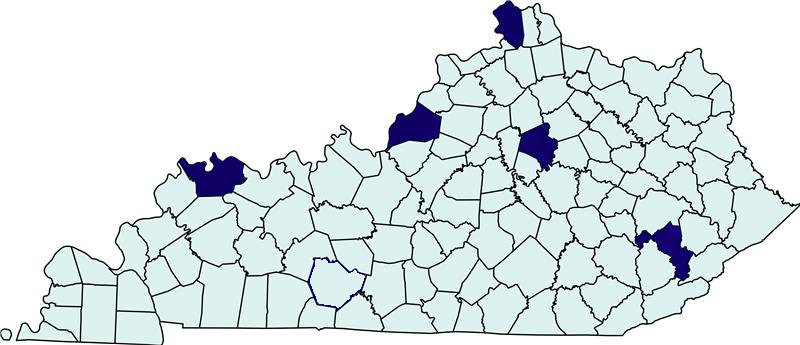
Workshop dates and locations
What is the NAIRR Pilot Program?
The NAIRR Pilot aims to connect U.S. researchers and educators to computational, data, and training resources needed to advance AI research and research that employs AI.
Artificial Intelligence (AI) holds the potential to accelerate discovery and innovation and reshape our modern workforce. However, many researchers and educators lack access to the AI resources necessary to fully conduct their research activities and to train the next generation. The National Artificial Intelligence Research Resource (NAIRR) is a concept for a shared national research infrastructure to bridge this gap by connecting U.S. researchers and educators to AI resources, namely computation, data, software, models, training, and educational materials to advance research, discovery, and innovation. Access to such infrastructure is expected to: accelerate AI and AI-powered discovery and innovation; expand the AI workforce and train the next generation of AI researchers and educators; increase capacity, integration, and use of world-class public and private-sector AI resources; and advance AI interpretability, security, and trust.
The NAIRR pilot is a proof-of-concept for the eventual full-scale NAIRR. The pilot focuses on supporting research and education across the nationwide research community, while gaining insights that will refine the design of a full NAIRR. It broadly supports fundamental, translational and use-inspired AI-related research with particular emphasis on societal challenges, and trains the next generation of AI researchers and educators by providing access to infrastructure and training resources.
For more information about this effort, please visit the NSF-hosted NAIRR Pilot website.
What is a NAIRR Pilot Expansion Project?
NAIRR Pilot Expansion Projects are multidisciplinary efforts involving teams of educators, researchers, and community engagement specialists who are undertaking specific capacity-building challenges that broaden access to, training on, or educational use of one or more NAIRR Pilot resources. Expansion Projects are aimed to expand the NAIRR Pilot community and enhance utilization of resources through targeted outreach, training, and inclusive community experiences.
What are NAIRR Pilot resources?
The NAIRR Pilot Resource Catalog hosts resources available to researchers. Resource types include Cloud, GPU Compute, Innovative / Novel Compute, CPU Compute, Service, and Sensors / Instruments, with categories that comprise federal agency systems, private-sector computational resources, private-sector model access, other private-sector contributions, and the Classroom Platform.
For more information about the Resource Catalog, please visit the NAIRR Pilot Resource Catalog.
About the Center for Applied Artificial Intelligence (CAAI)
The Center for Applied Artificial Intelligence (CAAI) is a specialized team that empowers faculty, staff, researchers, and clinicians to use AI. Operating like a problem-solving think tank, our staff includes early- and late-career software developers, project managers, data scientists, and advisors who help collaborators overcome common AI barriers in technical expertise and access to secure compute resources. We are guided by tenets of empowering, exploring, and doing. Without requiring technical backgrounds or costly investments, we help our collaborators quickly turn ideas into solutions that make an impact for the communities they serve. To date, CAAI has been the lead contributor on 65 AI projects, has completed 42 projects, and maintains a network of 43 partners and more than 120 individual collaborators.
Resources and Information
Resources and information to help support continued learning.
Speakers
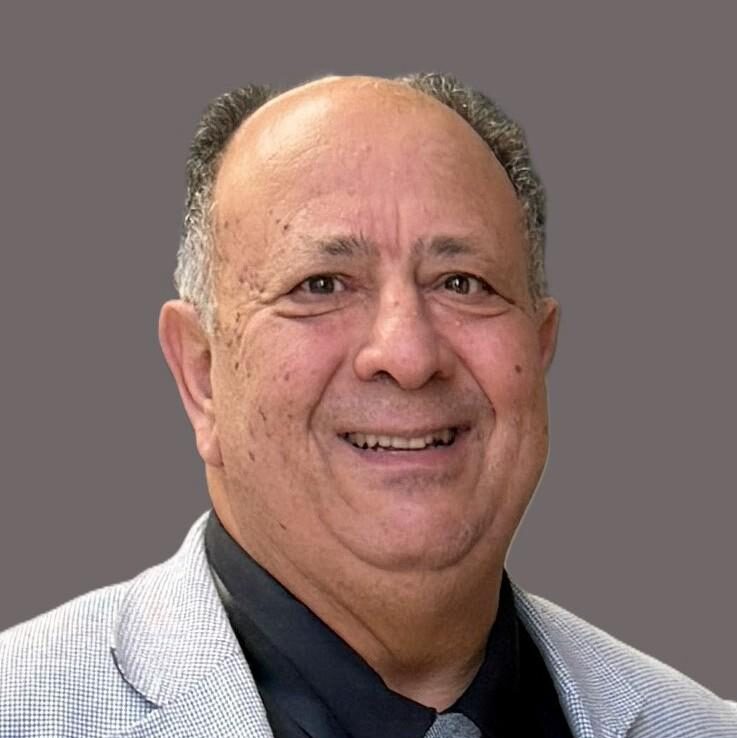
CAAI team






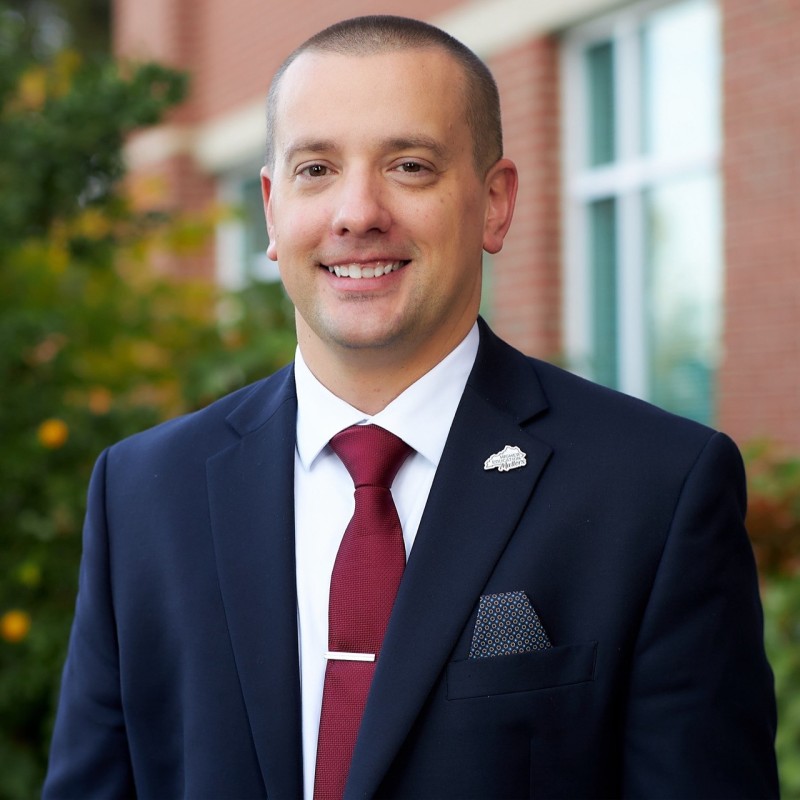
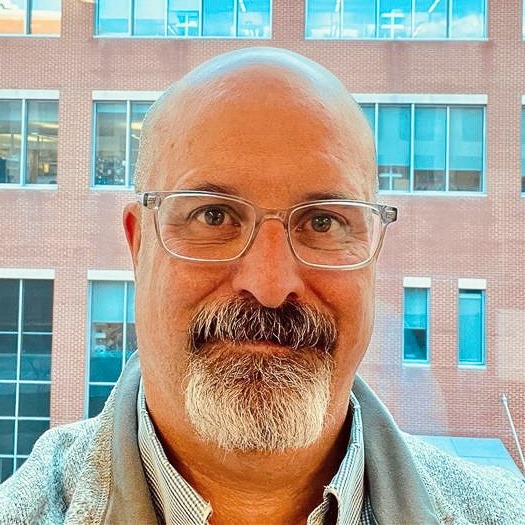
Featured workshop speakers




Frequently asked questions
Who should attend?
These workshops are designed for new and emerging researchers at Kentucky’s two- and four-year institutions, including early-stage career researchers. If you are interested in exploring how artificial intelligence can be applied within your work, this is for you.
What are the workshop dates?
Workshops are held across the state to ensure broad accessibility: Jefferson Community & Technical College (Louisville) on January 23, 2026; Gateway Community & Technical College (Florence) on February 26, 2026; Hazard Community & Technical College (Hazard) on March 26, 2026; Henderson Community College (Henderson) on April 17, 2026; and the University of Kentucky (Lexington), date TBD. Please monitor the program’s website for the most current information.
Do I need AI experience or a technical background?
No prior AI experience is required. After registering, you will be invited to complete a short pre-workshop survey to share your interests and technical background. This information will inform workshop planning, ensuring the content is tailored to the needs of each workshop group.
Is there a fee?
No, there is no cost to attend. Lunch will be provided at each day-long workshop.
Are there special accommodations?
The initiative is committed to fostering a safe and welcoming environment. Every effort will be made to provide reasonable accommodations for participants. Funding support for travel, including mileage reimbursement, is available by application. Registrants may indicate both accommodation requests and interest in travel support directly on the registration form.
Tell me more about participant support costs.
Thanks to our funding agency, the National Science Foundation (NSF), there are limited participant support funds available in the form of a flat-rate gift card for eligible attendees. Travel funds are awarded on a first come, first served basis by the organizing committee. To qualify, participants must be an enrolled student at a Kentucky college or university and have a residence they are traveling from located more than 60 miles from a workshop location. If you are interested, please indicate this on your registration form.
What about weather cancellations?
In the event of weather, we defer to the hosting campus for safety considerations. If the event is canceled due to weather, it will be rescheduled to a backup date.
This material is based upon work supported by the National Science Foundation under Grant No. 2528161. Any opinions, findings, and conclusions or recommendations expressed in this material are those of the author(s) and do not necessarily reflect the views of the National Science Foundation.